


3 years and 3 months… That’s the time that has passed between the moment I created this newsletter and today, the moment I’m publishing the very first post. In between: a few drafts, the hosting changed twice between Substack and a self-hosted Ghost blog, but nothing shipped… This behaviour is a typical example of the decision paralysis syndrome (the curse of optionality): a trap for curious and eclectic people like me.
The trigger: the least regret theory
Then came two triggers over the past few days.
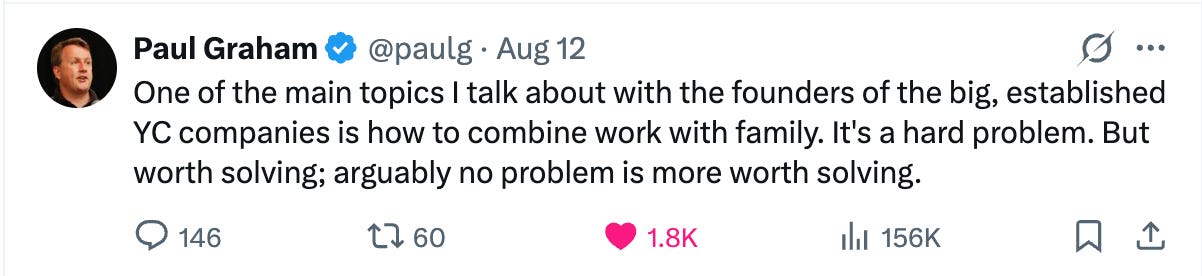
First, a post from Paul Graham on X about combining entrepreneurship with family life.
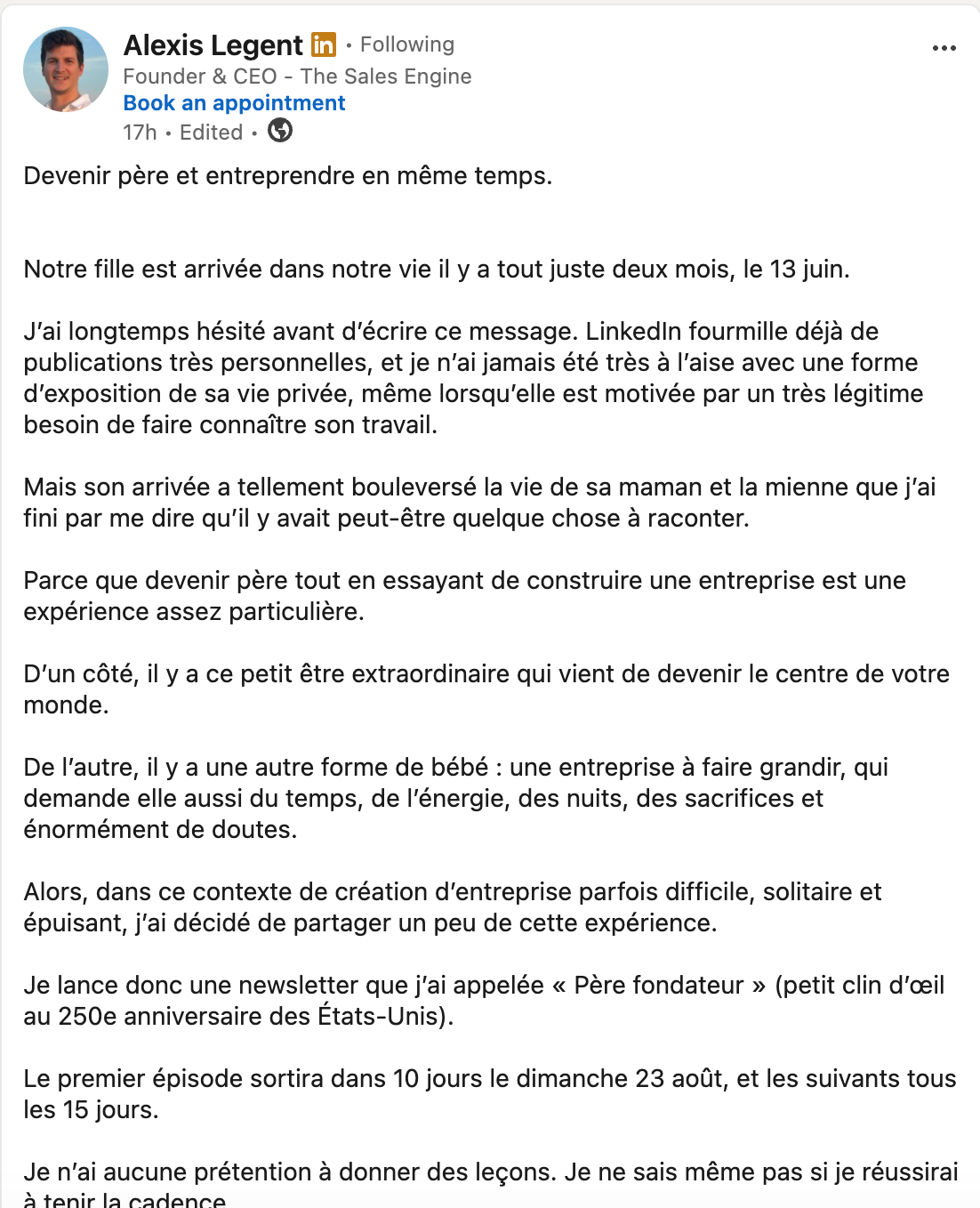
Second, a fellow French entrepreneur who had the joy of becoming a father a few days ago, announcing that he’s starting a newsletter about sharing his experience as a young dad and entrepreneur. Basically what the Bootstrapping Dad newsletter was supposed to be.
Jeff Bezos shared his method for making choices in life, what he calls the regret minimization framework:
Project forward: Imagine you are 80 years old sitting in a chair
Look back: Think about the choice you face today
Spot inaction: Ask which path of inaction will haunt you more
Choose boldness: Pick the option that stops future regret
So yes, this might sound silly, but I don’t need to project to 80. Even three years from now, I would regret not having shared what I’m learning as a dad, an entrepreneur and a software engineer. So let’s ship it and learn.
What we need is motion: ship, then iterate, NOT the other way around
The human brain learns from experience and feedback. Like many, I’m a champion of overthinking, building hypotheses about how the world should be, but not confronting them with the real world.
This is a behaviour I observed in many solo founders over the past six months (and it’s very prevalent among first-time founders). You have an idea, you build in your cave, and six months later you realise you haven’t shipped anything and haven’t talked to a single customer. The worst part is that the more time you spend building, the greater the fear of rejection, of confronting your creation with the real world.
To be clear, I’m no better and I struggle with this myself: procrastinating on this newsletter is a great example. In my past two companies I always had a co-founder, so the mutual push was a great motivator.
This time, at least for now, I’m flying solo, and this is hard. Hard because, for the first time, I realise that nobody is gonna take me by the hand and help me find my next venture. After a first idea about building a productised exit-readiness check for SMB owners in the context of company succession, I figured out that 1) this is a vitamin business and 2) distribution is a nightmare (post-mortem coming in a future issue). At that point, I was back to square one.
Taking a step back from my situation, I think the most important thing is motion. To make progress, you need to go out, talk to people, test and learn. Keeping the ball rolling, even if you don’t have something that sticks yet, has three advantages:
Maximise your opportunity surface: the more you go out and talk to people, the more you get exposed to opportunities and problems you might be best positioned to solve
Learn to ship: go beyond the shame of shipping something unfinished. You will learn to ring-fence projects, focus on one (and only one) valuable thing, and test whether you can get proof of demand
Let it be the launchpad for your next move: if what you ship interests nobody, that’s okay. Confronting it with the real world teaches you what to do next
So in a nutshell: better to ship something and iterate than to iterate before shipping. That way we maximise the amount of feedback we get and don’t loop in our own heads.
Worst case, I learn from experience and grow as a person
I’m a believer in Nicolas Boileau’s line:
« Ce que l’on conçoit bien s’énonce clairement, et les mots pour le dire arrivent aisément. »
“Whatever is well conceived is clearly said, and the words to say it come easily.”
However, I often struggle to articulate my thoughts, so this is a good way to practice and improve. As when launching a business: you iterate, learn and improve. That’s exactly the logic behind this newsletter.
I don’t pretend to give lessons. I will just consolidate my learnings along the way so that my future self can refer to them. Maybe some readers will find them useful too.
Looking for alignment: you will never get these years back
So OK, you get the idea: sharing an entrepreneurial journey, the good and the bad, technical learnings. BUT I think the most interesting part is the context of doing this while being a present dad of two. The question I will try to figure out for myself (and which might be useful to others) is how to keep the alignment between family life and entrepreneurial aspirations, while we’re often told you need to sacrifice almost everything to succeed (see hustle culture, from Alex Hormozi). I want to explore another way, nearer to what Naval Ravikant advocates: finding alignment between being an entrepreneur and being present to raise my kids and give them a few keys for life. Indeed, as most senior people would say, you never get these years back with your family, so better enjoy them. Again: the theory of least regret.
That’s issue #1. Shipped. Imperfect, three years late, but out the door.
PS: If you’re building something while raising kids, hit reply and tell me what you’re working on or struggling with. I read everything.